Now Reading: The Sandbox Sabotaged: How Corporate Greed Castrated the Brilliance of College Football 27
-
01
The Sandbox Sabotaged: How Corporate Greed Castrated the Brilliance of College Football 27
The Sandbox Sabotaged: How Corporate Greed Castrated the Brilliance of College Football 27
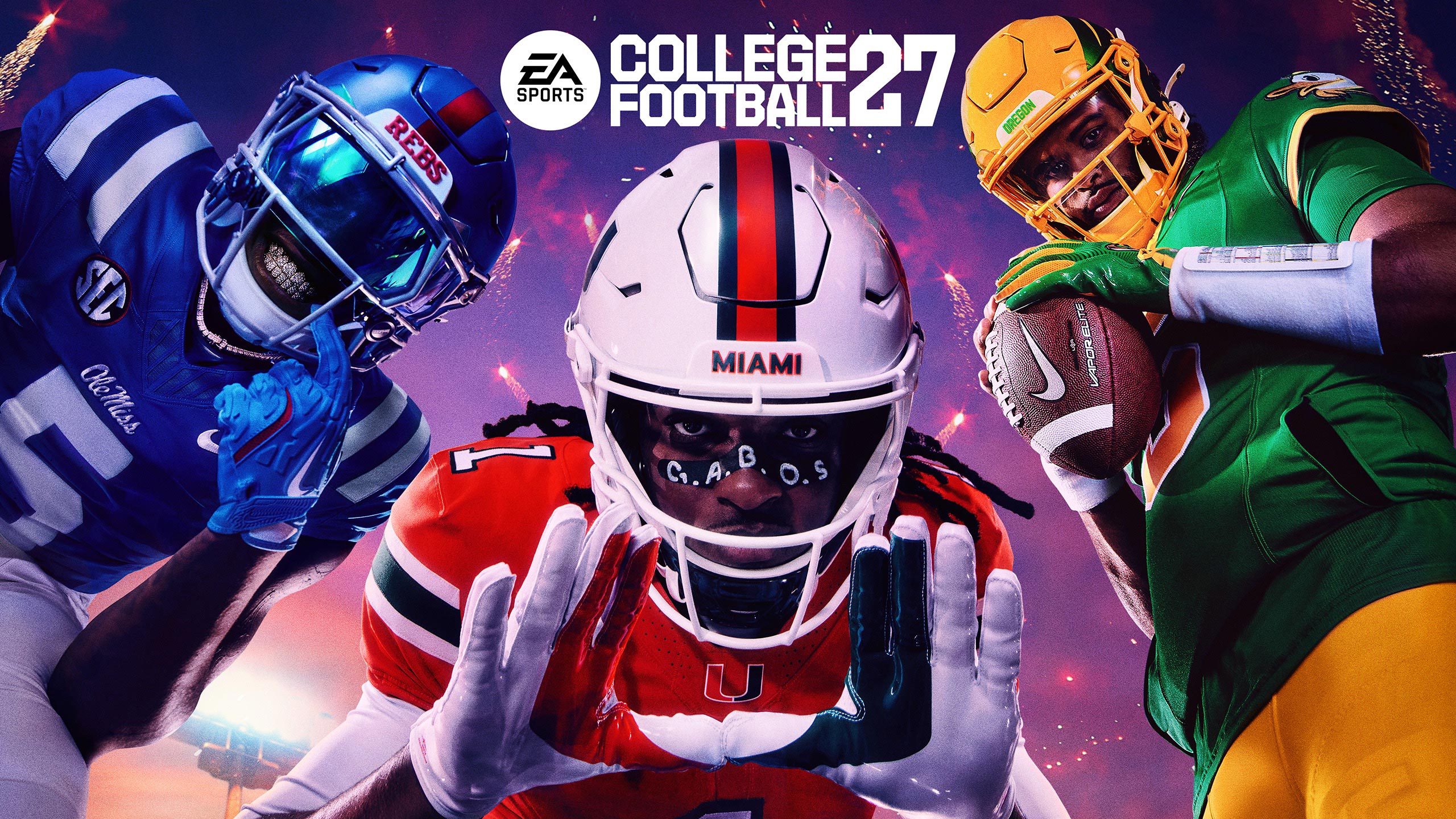
College Football 27 microtransactions are the story nobody wanted, buried under one of the sharpest football games EA’s made in years. Read on to catch our view on this hot topic.
Every EA Sports launch comes with the same tired script. Roster update tax, fans rolling their eyes, “Here we go again.” Fair enough, most years. But the early buzz on College Football 27 actually felt different. People were saying the devs cooked. The game moved sharper and faster than anything since the PS2 glory days.
Then it hit wider hands, and the real story wasn’t on the field. It was buried in the menus. Corporate leadership found a way to sabotage its own dev team’s work, cramming live-service microtransactions into modes that were supposed to be sacred, single-player, offline. College Football 27 is proof that a genuinely great game can still get strangled by greed.
The Great Creative Gag Order
Here’s what’s actually infuriating: it’s not just the monetization; it’s how hard EA worked to hide it. The “EA Creator Network” program used to mean early access so creators could hype the game and give real feedback. This year that got replaced with an outright gag order. Creators got hit with NDAs so restrictive they couldn’t say anything negative or even mention the economics of the game modes before launch.
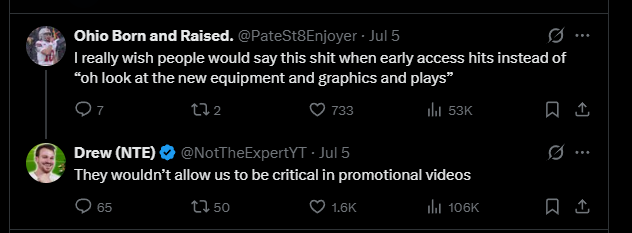
Not The Expert on Twitter
It took people breaking rank to actually tell the truth. Creators who signed up because they love football games got used as a human shield by executives who already knew the monetization plan would blow up the second it went public. That’s not a marketing misstep. That’s a calculated bet that silence would buy them a clean launch weekend, and it’s the kind of move that should worry anyone who cares about trust between creators and the games they cover.
Agility on the Field, Anchors in the Code
And here’s the part that makes this so hard to swallow: the on-field product is legitimately great. The Frostbite engine finally feels loose instead of locked into animation quicksand. Left-stick input actually matters. Running backs can find real gaps. Quarterbacks can break the scripted dropback and improvise in a collapsing pocket. Saturday afternoon chaos, captured properly, for the first time in a long time.
| DEVELOPMENT TRIUMPHS | CORPORATE SABOTAGE |
|---|---|
| Fluid, physics-adjacent locomotion | Leveling sliders cut from code to sell XP packages |
| Deep, strategic budget blueprinting | 5-star recruits nerfed to 54 OVR to force paywalls |
| Highly responsive defensive AI | |
| Authentic aesthetic player gear |
Even the on-field wins come with weird self-inflicted wounds. Meter-based inputs for catching and QB sneaks feel like EA trying to court the esports crowd, and they override attributes that should matter. Watch an all-99 offensive line fail a half-yard sneak because a human missed a tiny green zone on a meter, and you can feel the simulation crack.
College Football 27 Microtransactions Invade the Offline Sanctuary
For years, Dynasty and Road to Glory were the escape hatch from Ultimate Team’s casino energy. You could take a zero-star nobody school and build a dynasty through nothing but grit and smart recruiting.
College Football 27 turns that legacy into a toll road.
The new Dynasty blueprint system is genuinely well designed on paper. Balancing one shared resource pool between staff hires, facility upgrades, and NIL valuation makes running a small program feel appropriately brutal. That part works.
But dig underneath and the gears are jammed on purpose. PC modders found the old Fast/Fastest XP toggles still sitting in the code, just hidden from the UI. Why? Because slowing progression to a crawl means you’ll eventually reach for your wallet to speed it back up. And on top of that, the recruiting AI is broken enough that rival programs hoard kickers and punters, wrecking long dynasty saves over multiple seasons.
The Five-Star Paradox
Road to Glory is where this gets its most egregious. You’re supposed to be a five-star blue-chip athlete walking onto campus like you own the place. Instead you get slapped with a 54 overall the second you sign your letter of intent.
To close that gap, the game points you straight at the marketplace. In a closed-loop, strictly single-player mode. No leaderboard, no opponent, just you and the CPU. Locking your own solo story progression behind a paywall in that context isn’t just a bad decision, it’s a bold one. It tells you plainly: if you can’t afford to keep feeding the ecosystem, you don’t get to enjoy the game you already paid full price for.
At the end of the day, this is a game split against itself. The dev team clearly built something sharp, alive, and worth playing. It’s the executives who decided a dedicated offline fan base was just another wallet to squeeze.

AJ Hanson has been part of games media since 2011, writing, streaming, and ranting about the industry long before it was his job. He runs the Galaxy’s Edge Discord, the go-to community for fans of Disney’s Star Wars parks, and works as Marketing Director for the Virtual Cantina Network, helping produce shows, interviews, and fan events. A lifelong Star Wars fan and unapologetic nerd, AJ’s focus has always been on building spaces where people can connect, argue, and celebrate the things they love without all the corporate gloss.