Now Reading: The Games Are Great. The Industry Is a Mess. Both Are True.
-
01
The Games Are Great. The Industry Is a Mess. Both Are True.
Gaming revenue hit $201.6 billion in 2025. The highest it has ever been. The same industry that posted that number cut nearly 50,000 jobs since 2022, shut down studios mid-award season, and this week walked most of the Destiny team out the door three weeks after Destiny 2’s final update. If you’ve only been paying attention to one half of that picture, I get it. The other half is genuinely hard to look at.
But we need to talk about both. Because both are real, and pretending otherwise is how we end up sleepwalking into a worse version of this industry than we deserve.
The games right now are legitimately special, and I mean that
I’ve been covering games long enough to know when something actually matters versus when I’m just excited because a trailer was well-edited. What’s been happening in the past few years matters.
Sandfall Interactive is a small French studio with no publisher, no franchise safety net, and no reason to exist on paper by AAA industry logic. They made Clair Obscur: Expedition 33, a hand-painted JRPG with parry mechanics, a world that looks like someone dreamed it up during a fever, and writing that treats the player like an adult. It became one of the most acclaimed RPGs in years. Full stop. Not “acclaimed for a small studio”. Acclaimed.
That’s the pattern of the last few years told in miniature. Hades II left Early Access in 2025 and immediately sat next to the original as one of the best roguelites ever made. Mega Crit took their time with Slay the Spire 2, dropped it in early 2026, and the response was immediate: yes, obviously, of course. Hollow Knight: Silksong, the game that became a meme for not existing, sold over seven million copies. Pragmata in 2026 is a legitimate Game of the Year candidate, and it’s a completely original IP in a year where the rest of the AAA space is shipping sequels to sequels to sequels.
Most of this came from studios that major publishers wouldn’t have greenlit in a million years, with those studios opting to self-publish games that could be deemed too weird. Too risky. Not enough franchise recognition. The games making people feel something right now, the ones getting talked about in Discord at 2am, the ones that make you cancel plans, a huge chunk of them are coming from exactly the places the industry told us couldn’t compete.
On top of that, access to games has never been better. Game Pass. PS Plus. The Switch 2 landed in 2025 carrying decades of library behind it. Steam sales that make a ten-year-old classic cost less than a sandwich. I’ve been gaming my whole life, and I’ve never had more to play. That’s not a small thing. That’s genuinely worth celebrating.
And the industry that makes these games is in serious trouble
The GDC 2026 State of the Game Industry report is one of the most dispiriting documents I’ve read in years. One in three US developers laid off in the past two years. Nearly half of those people were still searching for work when the survey ran. Two-thirds of AAA studios conducted layoffs. Private investment in gaming dropped 55% in 2025. The industry generated record revenue and the people responsible for that revenue are losing their jobs, because the money isn’t reaching them.
Roblox drove 67% of net market growth in 2025 by itself. GTA Online, a 2013 game, still pulls around $500 million a year. Fortnite is tracking toward $6 billion in 2026. Publishers watched those numbers for a decade and convinced themselves they were one live-service launch away from the same result. Almost none of them were. And developers have spent the last three years paying the price for that boardroom fantasy.
Sony is the case study that won’t stop giving. They bought Bungie in 2022 for $3.6 billion to be the foundation of their live-service future. Then Concord happened. Development confirmed at over $200 million by Kotaku sources. Credible reporting from a Concord insider puts the real total, including the Firewalk Studios acquisition, closer to $400 million. It peaked at 660 concurrent Steam players. It was dead in two weeks. The studio was shut down.
And then this week happened.
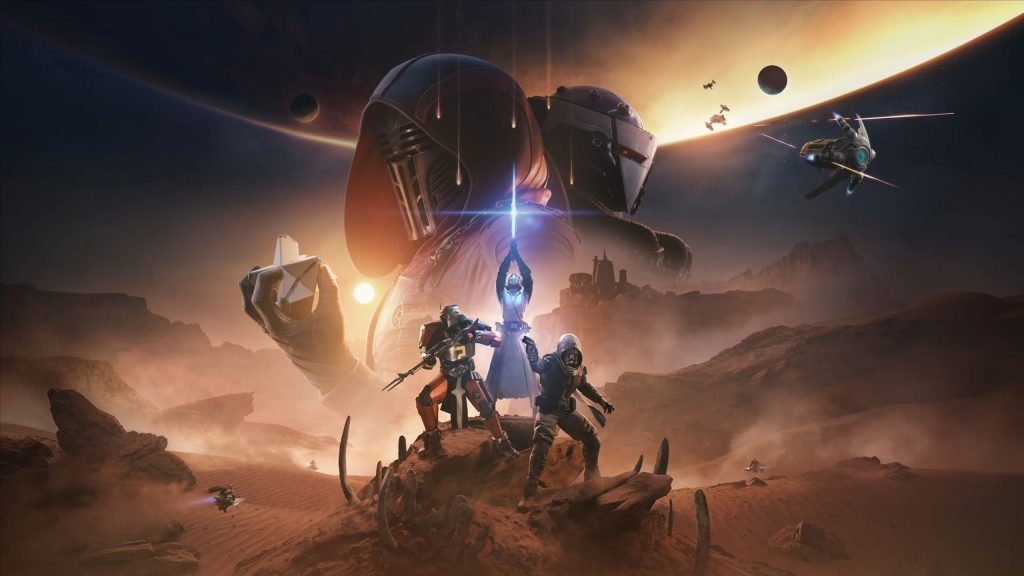
Destiny 2’s final content update shipped June 9. On June 25, three days ago, Bungie announced mass layoffs. A Washington state WARN filing confirmed 292 positions were cut. “Most of the Destiny team,” per Bloomberg’s Jason Schreier. The sandbox team. The cinematic team. The VFX team. Veterans who’d been there since the Halo days. Even Chief Vision Officer—and Bungie Co-Founder—Jason Jones. One developer posted: “Would have been 14 years at Bungie working on Destiny.” Another: “Generational talent is just gone.”
Bungie’s official statement said Destiny 2 had “fallen short of expectations over the past several years.” Sony took a $765 million impairment loss against Bungie in fiscal 2025. $204 million of that tied directly to Destiny 2’s declining player numbers.
What that statement doesn’t say, and what almost nobody is saying clearly enough, is that the 2024 Bungie layoffs cut the team so deep they couldn’t maintain the content cadence Destiny 2 needed to keep players engaged. Players left because the content dried up. That drop in players then became the stated justification for shutting the game down and cutting the rest of the team this week. Sony spent $3.6 billion on a studio, made decisions that broke the thing that the studio was known for, and then cited the results of those decisions as the reason for the final round of cuts. The people who built Destiny for a decade absorbed every consequence of choices made well above their level.
Sony, that isn’t “market outcome.” We’re not stupid. We have eyes. That is 100% a specific chain of decisions made by specific people. And it’s playing out across the industry simultaneously. EA sold to a Saudi-led consortium. Ubisoft needed a Tencent deal to stay standing. Epic cut 23% of its workforce in 2026. Warner Bros. has one game on its entire 2026 calendar. Microsoft shut down Tango Gameworks, the studio behind Hi-Fi Rush, which won awards, which people loved, which you can still find people talking about, months after it launched. Not because the game failed. Because the metrics being used to evaluate it had nothing to do with whether the game was good.
These aren’t two separate conversations
The indie explosion and the AAA collapse are feeding each other directly. When publishers gutted mid-budget development, the complete 20-to-40-hour game that doesn’t need a live-service hook to justify its existence, they left an enormous audience with nothing to play. Developers who couldn’t get publisher backing built those games independently. The tools were cheap. Steam was open. The players were there the whole time, waiting, and nobody in the boardroom had noticed.
Tango Gameworks made Hi-Fi Rush inside a major publisher and got shut down anyway. Sandfall Interactive made Expedition 33 with no publisher at all and produced one of the best games of the year. That contrast is the whole argument in two sentences.
The people making the games are not the problem. They never were. The developers who spent this week posting farewell messages built something millions of people genuinely loved. The teams at Tango, at Arkane Austin, at Firewalk, they made things worth caring about. What failed them wasn’t creativity or craft or passion. It was the business infrastructure sitting above all of that, making decisions driven by metrics that have nothing to do with whether a game is good, whether it resonates, whether it makes someone feel something.
That infrastructure is in bad shape. Record revenue and all.
We need to be able to celebrate what the games are right now and be furious about what the industry is doing to the people making them. Those aren’t competing positions. They’re the same position, held honestly.
Play the games. They’re worth every minute. Just know who made them and what it actually cost them to get there.
This is part one of an ongoing series. Next: the studios the industry wrote off that delivered the best games of the last three years, and what they tell us about where the real creative energy lives right now.

AJ Hanson has been part of games media since 2011, writing, streaming, and ranting about the industry long before it was his job. He runs the Galaxy’s Edge Discord, the go-to community for fans of Disney’s Star Wars parks, and works as Marketing Director for the Virtual Cantina Network, helping produce shows, interviews, and fan events. A lifelong Star Wars fan and unapologetic nerd, AJ’s focus has always been on building spaces where people can connect, argue, and celebrate the things they love without all the corporate gloss.