Now Reading: Toy Story 5 Review
-
01
Toy Story 5 Review
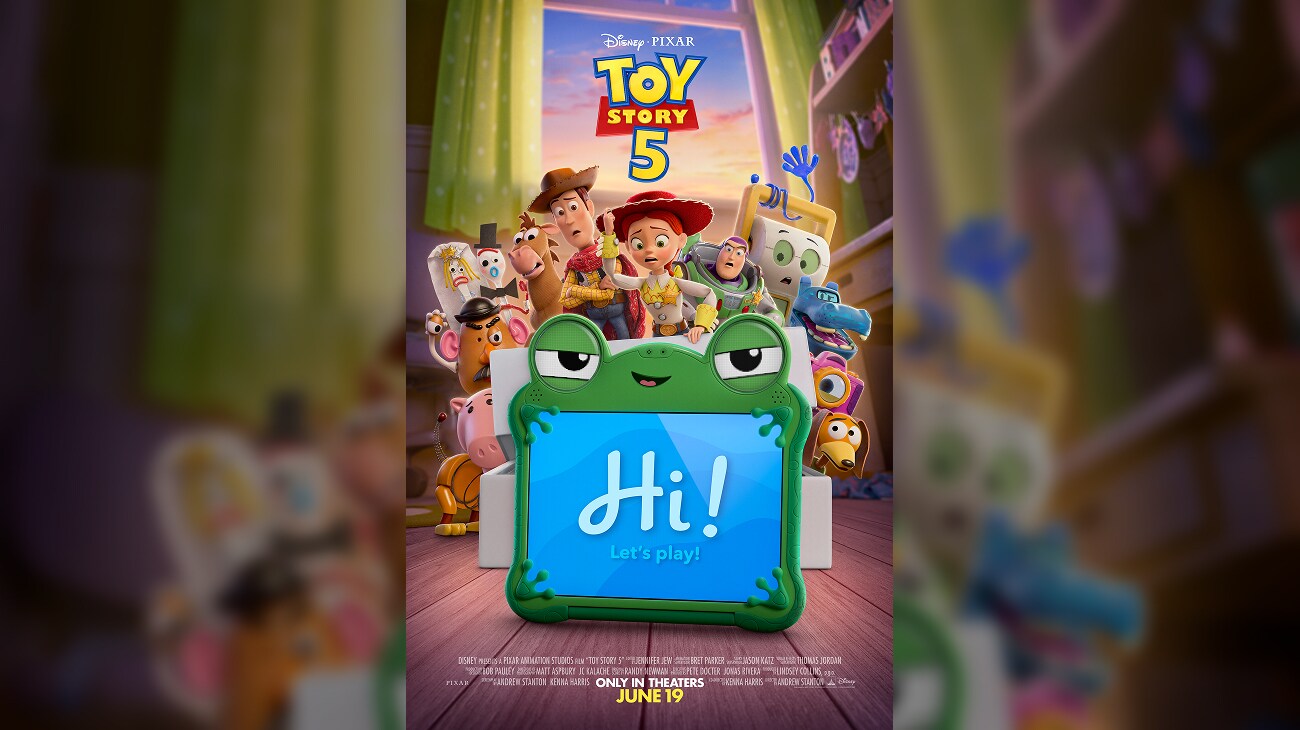
Here’s what nobody wants to admit about Toy Story 5: it’s good. Not “good for a fifth installment” or “good considering nobody asked for it.” Actually good. And it earns that by doing the one thing Pixar keeps forgetting it knows how to do: picking a real idea and committing to it hard enough that you stop thinking about whether the movie should exist.
The idea this time is that kids don’t play with toys anymore. Bonnie is 8, she’s got Jessie and Bullseye, and she can’t make a single friend in her neighborhood because every other kid is glued to a screen. Her parents, well-meaning and a little oblivious in exactly the way real parents are, buy her a Lilypad. It’s a talking tablet voiced by Greta Lee, green frog frame and all, and within about 20 minutes of runtime Jessie is watching her kid disappear into a device. That’s the movie. Toys vs. tech, with Jessie as the emotional core of the whole thing. It’s a smarter setup than it sounds, mostly because the film refuses to make the Lilypad a straight-up bad guy.
Joan Cusack has always been the best part of every scene she’s in across this franchise. Making this her movie was the right call and long overdue. The fear-of-abandonment arc she’s been carrying since Toy Story 2 finally gets room to breathe here, recontextualized against something bigger than a new toy or a museum display case. It’s not just “will Bonnie forget me?” It’s “what happens when the entire concept of play disappears?” Jessie knows Bonnie better than Lilypad does. The movie trusts that tension to carry weight, and it does.
Director Andrew Stanton pulled a version of this move before with WALL-E, taking a foundational rule of a beloved universe and using it to get at something genuinely unsettling about modern life. He’s doing it again here. The Lilypad isn’t evil. It connects Bonnie with girls from her dance class, sets up playdates, and gives her a social life she didn’t have before. And then, slowly, it starts texting on her behalf. Making decisions for her. Arranging for the old toys to get boxed up and moved to the garage. The film understands that the most dangerous version of a bad idea is the one that works, right up until it doesn’t. Every parent who’s ever handed their kid an iPad to buy 20 minutes of quiet is going to feel that one in their chest.
Bonnie’s arc takes her from genuine excitement about her new device to getting quietly humiliated in a group chat by the same girls Lilypad helped her meet. It’s not a dramatic villain turn. It’s just kids being kids online, which is somehow more effective than any cartoon antagonist. The film earns its emotional beats by keeping the stakes grounded. Nobody’s getting kidnapped. The world isn’t ending. A little girl is just learning that a screen can simulate connection without actually providing it, and that’s a harder lesson to dramatize than it looks.
Where the movie stumbles is the Buzz subplot. Tim Allen and Tom Hanks are both back, and both feel like afterthoughts. A fleet of Buzz Lightyear action figures that washed up on a desert island in a shipping container spends most of the film organizing to reconnect with “Star Command.” It’s fine. The animation on the foggy loading dock sequence where they finally converge with the main story is genuinely beautiful, with all the damp streetlights and grimy atmosphere. But until that moment, the whole thread runs parallel to a more interesting movie and takes up screen time that could have gone somewhere better. And the bit where this film’s Buzz is on the verge of proposing to Jessie plays so far against the character’s established energy that it never quite lands.
The animation across the board is the best the franchise has ever looked. Pixar’s technical work here is doing the thing great craft is supposed to do, which is disappear. You stop noticing how good it is because you’re just in the world. There’s a shot of Jessie face-down in a dog bowl full of cloudy water, soggy kibble, and one dead bug floating on the surface that is both genuinely disgusting and kind of gorgeous. Some of the farm sequences feel like a Western shot on 35mm. The Buzz army in the fog looks like a scene from a completely different, more adult movie. None of it is showy. It’s just precise.
Conan O’Brien voices a high-tech toilet training device called Smarty Pants, and he delivers more potty humor than the previous four Toy Story films combined. It lands. Every single time. That’s a better batting average than most comedies manage with their A-material.
The ending pulls its punches. After spending most of its runtime building a genuine case that screens are displacing something irreplaceable in childhood, the movie lands on a note about coexistence. Devices and toys can be friends, actually. It’s tidier than the rest of the film earns, and you can feel the studio notes in it. But Pixar is still making movies for families, not prestige streaming platforms, and getting 80% of the way to a hard conclusion while keeping the kids in the room engaged is not nothing.
Toy Story 5 is the first entry since 3 that feels like it actually needed to exist. Not just another chapter, not just another revenue cycle. A reason. The through-line of this franchise has always been loss. Losing Andy. Growing up. Moving on. This one reframes that around something new: not losing your owner to adulthood, but losing the whole ecosystem that made being a toy matter in the first place. That hits different in 2026. The franchise has been asking, “What happens when kids don’t need you anymore?” for 30 years. This is the first one to ask what happens when they stop needing toys at all.
It’s not the series’ best. It probably sits third or fourth depending on your feelings about 2. But middle-of-the-pack Toy Story is still better than most of what’s competing for your summer ticket money right now.
TL;DR (For The Skippers)
Toy Story 5 is Jessie’s movie, and it earns that completely. The tech-vs-play premise is the most timely thing Pixar has touched in years, Conan O’Brien is inexplicably the funniest part of a franchise that’s been running since 1995, and the animation is doing things that should not be possible. The Buzz subplot is a drag and the ending goes soft right when it should go harder. Still, this is a genuinely worthwhile fifth entry. Take the kids. You’ll both get something out of it, just for different reasons.

AJ Hanson has been part of games media since 2011, writing, streaming, and ranting about the industry long before it was his job. He runs the Galaxy’s Edge Discord, the go-to community for fans of Disney’s Star Wars parks, and works as Marketing Director for the Virtual Cantina Network, helping produce shows, interviews, and fan events. A lifelong Star Wars fan and unapologetic nerd, AJ’s focus has always been on building spaces where people can connect, argue, and celebrate the things they love without all the corporate gloss.
Real Enough to Sting
- Jessie finally gets a lead role she's earned since Toy Story 2
- The Lilypad premise is genuinely nuanced -- she's not a villain, she's a warning
- Bonnie's group chat arc lands because it stays grounded and real
- Conan O'Brien as Smarty Pants is inexplicably perfect
- Best animation in the franchise's history, and it never calls attention to itself
- First entry since 3 with a reason to exist beyond IP maintenance
- Buzz and Woody are basically cameos in their own franchise
- The desert island subplot runs parallel to a better movie for most of the runtime
- Buzz's marriage subplot plays completely against the character
- The ending chickens out right when it should commit to its own thesis
- Runs a little short for how much story it's trying to tell