Now Reading: Ashley McBryde – Wild Review
-
01
Ashley McBryde – Wild Review
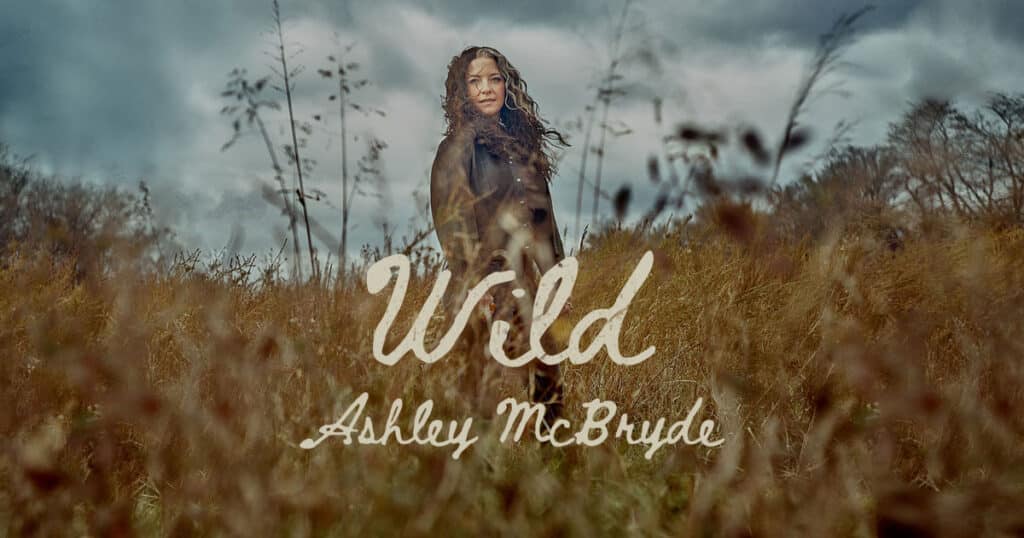
In 2021, Ashley McBryde fell off a horse in Montana and landed on her head. Not a metaphor. She ended up in an emergency room with a concussion and scalp stitches, unable to walk without help, facing the real possibility that she might never perform again. While she was lying there, somewhere in the fog of that recovery, a question started eating at her: what if something had happened and nobody ever got to hear “Rattlesnake Preacher”? Or “Water in the River”? Or “Creosote”? What if she kept letting herself be talked out of those songs and then one day the opportunity was just gone?
Wild is the album that answers that question. It is Ashley McBryde deciding she is done being palatable.
She said as much herself: the songs that make up this record were once described to her as too raw, too honest, too unvarnished for release. She kept playing them live anyway, year after year, watching crowds respond to them like they were already part of the canon. The fact that they finally exist on a proper studio record, produced by John Osborne and recorded with her live band Deadhorse in what sounds like a single exhale, feels less like a release date and more like a correction of the historical record.
And what a record it is.
The album opens with “Rattlesnake Preacher,” a song that has been in McBryde’s live set so long that her fans know every word. On record, it’s a dirty, swaggering thing with a guitar riff that smells like cigarette smoke and summer asphalt. It sets the terms immediately: this album comes from the Ozarks, from a fundamentalist upbringing, from a woman who was raised on fire-and-brimstone sermons and has spent her adult life figuring out what she actually believes. “Arkansas Mud” follows, and if you ever wondered what it sounds like when someone reclaims the edges they were told to file down for someone else’s comfort, this is your answer.
Then the album does something unexpected. It turns inward.
“Bottle Tells Me So” is the kind of song that makes you stop whatever you’re doing. McBryde got sober in 2022, and she was terrified about what that would mean for her writing. She’d always had drinks while working on songs, and the fear that sobriety would dull the edge was real. It didn’t. If anything, the opposite is true. The song stares at the wreckage of a night she barely remembers, describing waking up and piecing together the evidence, and it does so without a single moment of self-pity or performance. It’s just honest, the way the best country songs are honest, in a way that makes you feel slightly caught. “Behind Bars” goes even further, gut-wrenching in a way that earns that word for once.
What makes Wild different from any other album about addiction and recovery is that the songs never feel like they’re about addiction. They feel like they’re about a specific person, in specific moments, with specific memories attached. That’s the distinction that separates a great country song from a thematic exercise. McBryde knows the difference.
She also did something new here: she let other writers in. Five of the eleven tracks are songs she didn’t write or co-write herself, pulled from writers like Lori McKenna, Matraca Berg, and Travis Meadows. For an artist who has always been identified as a songwriter first, that’s a departure. But the reason she gives for it is exactly right. These songs found their way to her and immediately felt like hers. You can’t tell which ones they are by listening. They all sound like Ashley McBryde telling Ashley McBryde’s story.
“Lines in the Carpet” is the one that’ll start arguments, in the best way. It’s a song about domesticity and the slow erosion of who you were before you became somebody’s idea of who you should be. The title track opens up into something almost hymn-like in its ambition, asking whether the wild still calls to you from a distance and whether you miss the fire and the freedom, and it doesn’t flinch from the answer. “Hand Me Downs” carries that weight in a different direction, into generational inheritance and what we pass along without meaning to. “Ten to Midnight,” written with Travis Meadows, closes the album right at the edge of the decision to get sober. Not past it, not through it, just at the moment before. It lands like a door closing softly in an empty house.
McBryde shot a music video for every single song on this album. All eleven. That almost never happens, and the reason it almost never happens is that it’s a staggering amount of work and commitment and resources. The decision to do it reflects how seriously she takes the idea that these songs exist as a complete thing, a story with a beginning and an end, not a collection of singles hoping one of them breaks through. Watch them in order. It matters.
That story spans more than fifteen years of songwriting, and it culminates not at recovery, not at triumph, but right at the edge of the before. Right at the moment when everything was still at stake. Which is braver, honestly, than a redemption arc would be.
Wild is her best album. The songs are grown, to use her own word, in the way that only happens when someone gets out of their own way. You get the sense that Ashley McBryde spent a long time being told what this music should sound like, and that she finally stopped listening. What came out the other side was this: eleven songs that add up to something you’re going to be thinking about long after the record stops spinning.
For The Skippers (TL;DR)
Ashley McBryde’s fifth album is the one she was told not to make. Raw, loud, sober, and completely hers. It covers addiction, identity, generational weight, and the terror of being known, without blinking at any of it. She let other writers in for the first time, shot a video for all eleven songs, and somehow made a record that sounds both lived-in and brand new. If you only listen to one country album this year, this is the one. Go in order. You’ll thank yourself.
AJ Hanson has been part of games media since 2011, writing, streaming, and ranting about the industry long before it was his job. He runs the Galaxy’s Edge Discord, the go-to community for fans of Disney’s Star Wars parks, and works as Marketing Director for the Virtual Cantina Network, helping produce shows, interviews, and fan events. A lifelong Star Wars fan and unapologetic nerd, AJ’s focus has always been on building spaces where people can connect, argue, and celebrate the things they love without all the corporate gloss.