Now Reading: Star Wars Zero Company: The Only Primer You Need Before August 27
-
01
Star Wars Zero Company: The Only Primer You Need Before August 27
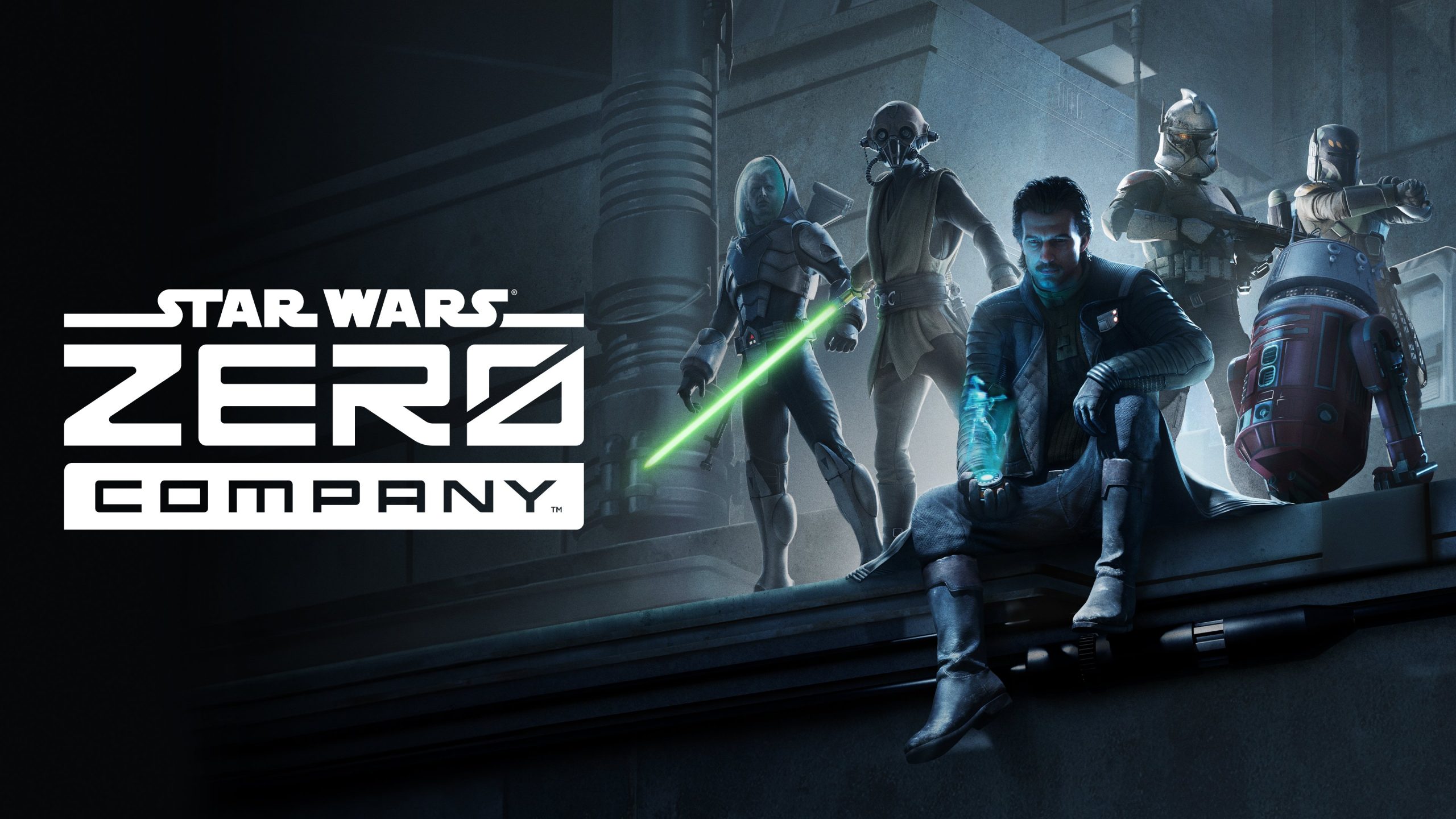
Star Wars fans have been asking for a real strategy game set in this galaxy for years, and on August 27, Bit Reactor is finally delivering one. Star Wars Zero Company is a single-player, turn-based tactics game built by former XCOM and Civilization developers, and after a string of trailers, gameplay reveals, and hands-on previews throughout 2026, we finally have a clear picture of what this thing actually is.
This is everything confirmed so far: the story, the combat systems, the classes, the villains, and the base you’ll be running between missions. If you’re trying to figure out whether this belongs on your radar before launch, start here.
Want the video? You press the button, we call YouTube.
Nothing loads from YouTube until you click. We’ll use youtube-nocookie.com after that, YouTube may track per their policy.
If you accept this notice, your choice will be saved and the page will refresh.
The Basics
Star Wars Zero Company launches August 27, 2026 on PlayStation 5, Xbox Series X/S, and PC via Steam. It comes from Bit Reactor, a studio founded in 2021 by Greg Foertsch, who served as art director on XCOM: Enemy Unknown and XCOM 2 during his time at Firaxis. The team is stacked with veterans from XCOM, Civilization, Gears of War, and Elder Scrolls Online, and it shows in how deliberately the combat systems break from the tactics genre’s usual playbook instead of just copying it.
EA is publishing, with Respawn Entertainment and Lucasfilm Games collaborating on development. This is Bit Reactor’s debut title, and it’s launching with a full symphonic score from Gordy Haab, who’s scored plenty of Star Wars games before this one.
Standard edition runs $49.99 on PC and $59.99 on console. A Deluxe Edition is also available with cosmetic content, and pre-orders come with a Crystalline Astromech Pack that includes an R3 droid, translucent crystalline heads for the R4 and R5 variants, and an exclusive BR-1 droid.
The Setting and Story
The campaign is set in 20 BBY, roughly a year before Revenge of the Sith, right as the Clone Wars are collapsing into chaos and the galaxy’s stability is falling apart with it.
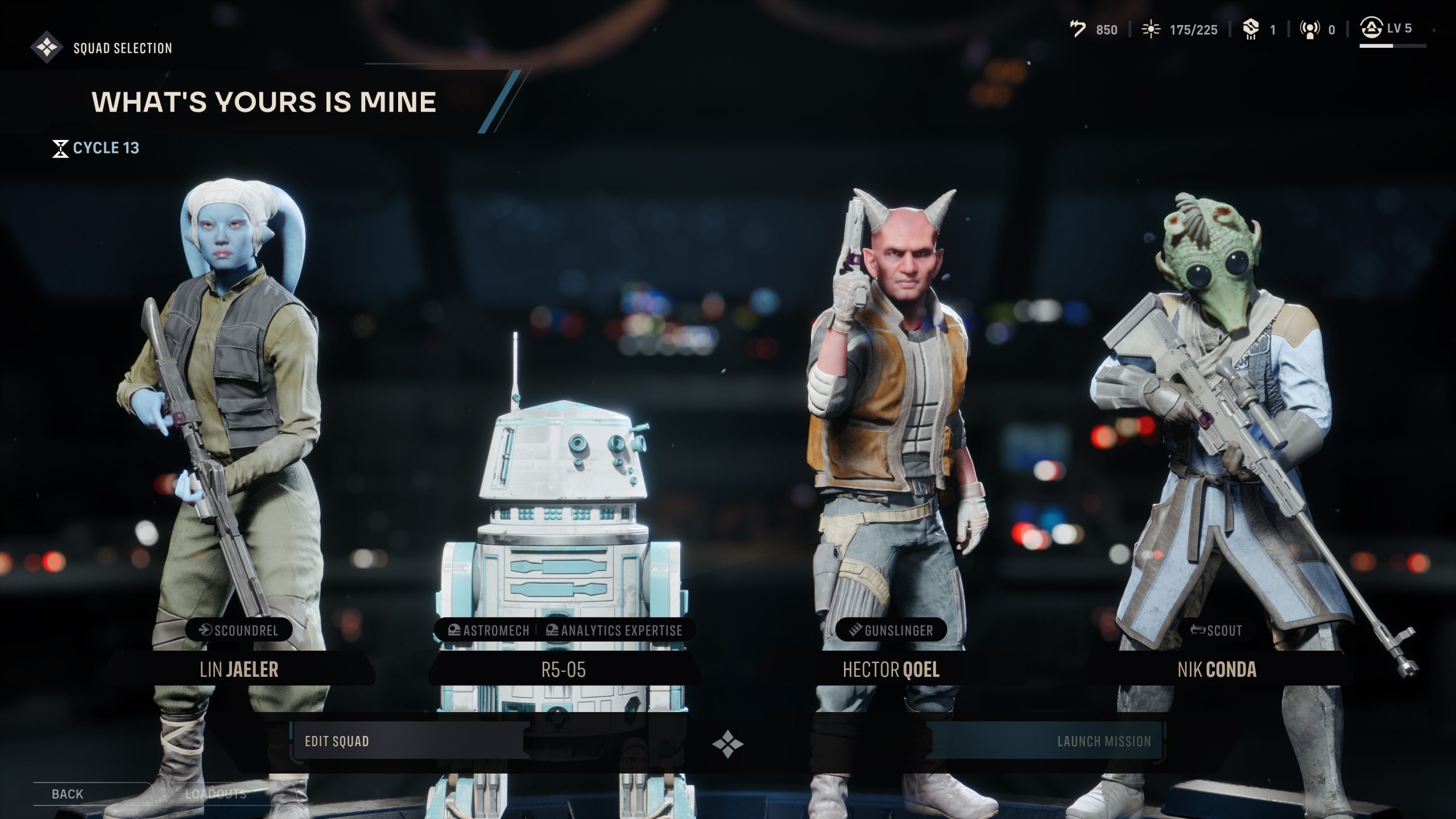
Star Wars Zero Company Menu
You play as Hawks, a former Republic Captain who’s buried in debt to the Hutts. To dig himself out, Hawks cuts a deal with shadowy Republic underworld contacts and a dispossessed Ore-Baroness named Jae Mordant. In exchange, he’s tasked with assembling a covert strike team unlike anything the Republic would normally sanction: clone troopers, mercenaries, a Jedi, and even former Separatists, all operating outside the official chain of command.
Hawks himself is fully customizable, down to gender, appearance, and voice, and he operates from a third-person, action-adventure perspective when he’s not in combat.
The Villains: The Infinite Coil
The threat Zero Company is built to fight is a group called the Infinite Coil, a secretive Dark Side cult loosely aligned with the Separatists but running its own agenda entirely. Rather than chasing military conquest, the Coil wants to infect the galaxy itself. Three figures lead it:
- Kundri Fathom is the cult’s charismatic, calculating leader, using dark side influence and pure charm to command total loyalty from her followers.
- Visser serves as Fathom’s field commander, leading the cult’s most zealous fighters directly into combat against Zero Company.
- Typhon is a reprogrammed Separatist Super Tactical Droid who’s developed his own cold obsession with the dark side.
Their weapon of choice is called the Shadow Plague, a Force-driven affliction that mutates the biology of anyone infected, granting strange power at a steep physical cost. This isn’t just flavor text either. It directly changes how you have to approach combat.
When an infected enemy dies on the battlefield, their essence transfers instantly to a nearby ally, buffing that surviving enemy’s stats and resilience. Kill Shadow Plague hosts one at a time and you’re effectively building a single, hyper-powered mini-boss by the end of the fight. The fix is to spread damage evenly across the whole group instead of focus-firing, which is a genuinely clever way to force players out of their usual tactics habits.
Zero Company’s Roster
Hawks assembles a team of authored companions, each carrying their own ideological baggage into the Den, the group’s hidden base:
- Trick (CT-3301) is a veteran clone trooper and Hawks’ loyal second-in-command, with a soft spot for games of chance.
- Tel-Rea Vokoss is a Tognath Jedi Padawan, expelled from the Jedi Temple, trying to finish the mission her fallen master left unresolved.
- Cly Kullervo is a Mandalorian gunslinger and one of the last surviving members of Clan Verminoth, an ancient clan never before seen in Star Wars canon. She’s here purely to chase a personal vendetta.
- Luco Bronc is a sharp-tongued Umbaran sniper who lived through the Republic’s brutal invasion of his homeworld, and he hasn’t forgiven clones or the Republic for it. That tension with Trick alone should make for some volatile squad dynamics.
- Kabb Uppercut is a cybernetically enhanced former boxer rounding out the roster.
- Jae Mordant is the witty Ore-Baroness from Shu-Torun who set this whole operation in motion after the Infinite Coil seized her mining citadel on Luunata. Her wealth and political connections are what keep Zero Company funded.
These characters don’t sit quietly in the background. Their conflicting worldviews force Hawks into narrative Dilemmas throughout the campaign, and how you navigate those choices has real consequences. Push relationships too far and a character can walk away from the company entirely.
Combat: What’s Actually New Here
Bit Reactor is clearly building on the XCOM foundation its team knows inside and out, but several of the core systems represent a real departure from that formula.
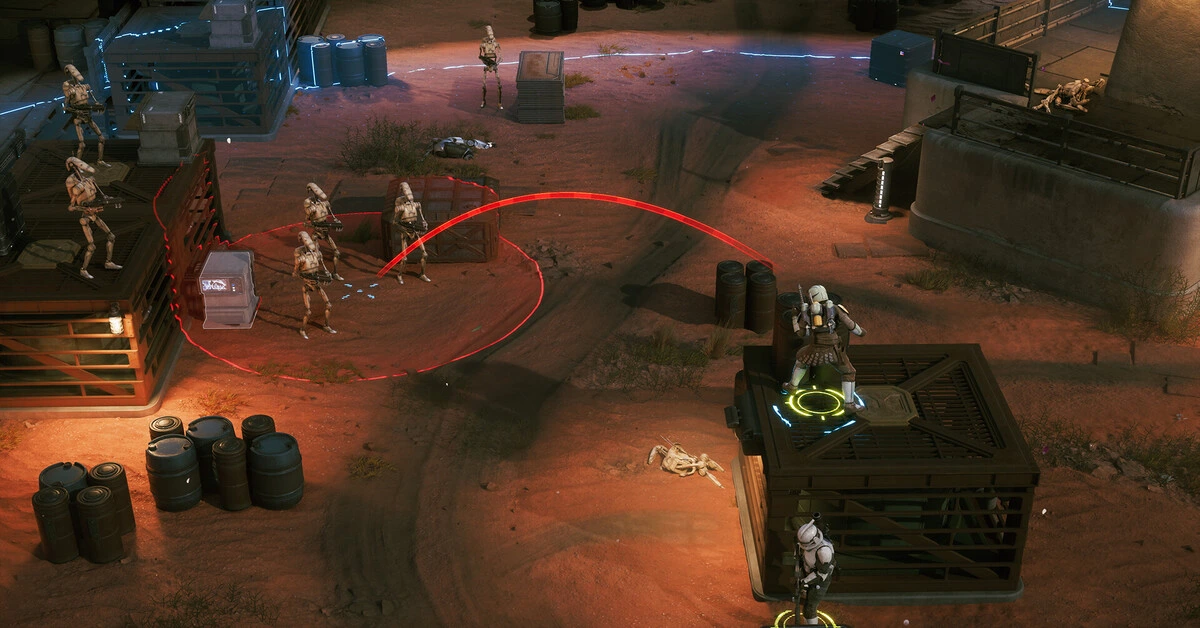
Star Wars Zero Company Gameplay
The 3-AP System. Forget the classic two-action move-or-shoot limit. Every Operator gets three Action Points per turn, and you can spend them on movement, attacks, items, or abilities in whatever order makes sense. Movement cost scales with distance, and attack costs vary by weapon, which opens up a lot more flexibility turn to turn than the genre’s usual binary choices.
Cone-based Overwatch. Overwatch isn’t a simple “shoot anything that moves” trigger anymore. You manually set an adjustable viewing cone, and it only fires if an enemy walks into that specific field of view. How many enemies you can hit depends on how much AP you commit, and your accuracy shifts based on how wide you make the cone. It rewards actually thinking about sightlines instead of just parking a unit on overwatch and forgetting about it.
Environmental combos. Abilities are designed to chain together. Bit Reactor has shown off using a Jedi’s Force Push or a heavy’s Uppercut to physically knock an enemy out of cover and directly into an ally’s waiting overwatch cone. It’s the kind of systemic interaction that makes for great highlight clips and, more importantly, genuinely smart tactical play.
Advantage. Landing hits and playing smart builds a shared squad resource called Advantage. Spend it to trigger your squad’s biggest abilities without eating into anyone’s AP for the turn. Since it doesn’t cost movement or standard actions, banking Advantage effectively lets you pull off powerful “free actions” in the middle of a tight fight.
Permadeath and the Injury System
Bit Reactor isn’t shying away from the cost of war here. When an Operator drops to zero health, they’re downed, not dead. A squadmate can Rally them back up, but that character takes a permanent Injury with a lasting stat penalty.
Rack up three injuries on standard difficulty and that Operator dies for good. This isn’t limited to the random mercs you recruit off the street either. It applies just as much to your hand-crafted Authored Operators, meaning your Jedi or your Mandalorian companion can genuinely die and stay dead, with the story rippling forward to reflect it.
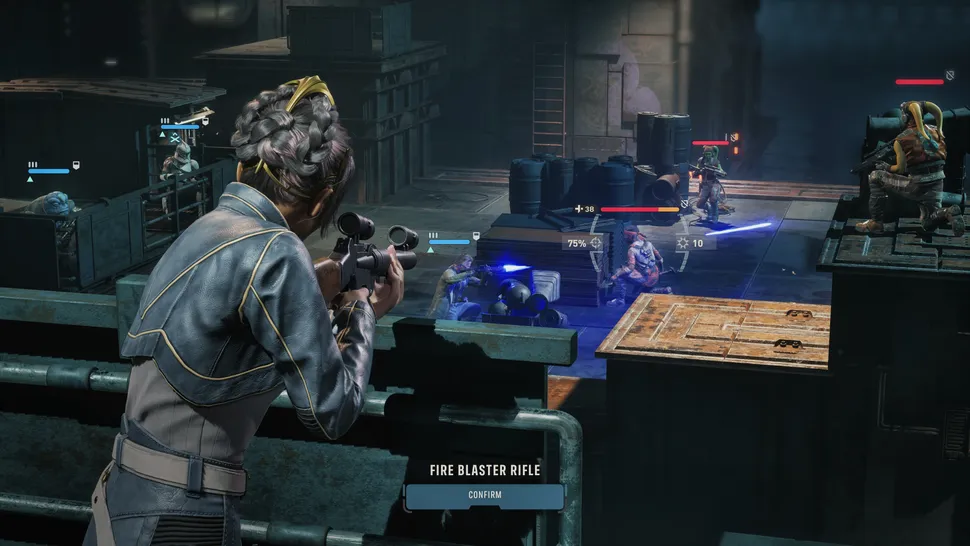
The Den: Your Home Base
Between missions, the game shifts entirely into a third-person, walk-around home base called the Den, a hidden hangar tucked into the asteroid ring around Kafrene.
You’ll physically move through the Den to upgrade facilities, customize weapons and loadouts in the Armory, recruit new Operators, patch up wounded squadmates in the Medbay, or shop the Black Market. Custom recruits can be built from eight confirmed species: Human, Twi’lek, Togruta, Zabrak, Devaronian, Neimoidian, Ovissian, and Weequay.
The Campaign Loop
Time moves in cycles, tracked through a central Holotable. Each cycle opens up new assignments across planets including Geonosis, Felucia, Umbara, Bespin, Dantooine, Lothal, and Ryloth.
There are two kinds of missions. Tactical Missions are your hands-on, turn-based combat encounters that drive the main story or secure key assets. Operations are passive, narrative-based assignments where you send Operators off to gather credits, loot, or intel without playing it out directly.
Everything runs on a clock. Missions and operations expire if you sit on them too long, and you can run sabotage missions specifically to deny enemy factions upgrades permanently. Since you can’t do everything in a single playthrough, every run through the campaign ends up looking a little different based on what you prioritized.
Bonds and Dilemmas
Hawks faces recurring Dilemmas throughout the story, and his core companions weigh in with real, often conflicting opinions on what to do. How you handle those moments, plus who you deploy together on missions, shapes the relationships between your crew over time.
Strong bonds earn Focus Points, spendable in a Focus Tree to boost passive talents. Max out a bond between two characters, and you unlock Cross-Training, which grants permanent stat boosts and unique dual-synergy passives specific to that pairing.
The Class System
Every Operator is built from four layered components, which is why two Operators sharing a class can still play completely differently:
- Talent Specialization: one or two unique abilities locked to that individual character.
- Weapon Specialization: Pistol (mobile, close-range), Rifle (versatile, mid-range), Long Arm (extreme range, precision crits), or Repeater (heavy suppressive fire that shreds cover).
- Primary Specialization: the character’s starting class from the eight standard roles.
- Secondary Specialization: unlocked midway through the campaign, letting you pick a second class from that same pool to dual-class your Operator.
The 8 Standard Specializations
| Class | Combat Focus | Playstyle |
|---|---|---|
| Assault | Frontline fighter built for mobility, clearing enemies out of medium and close-range cover | Aggressive players who want constant initiative |
| Gunslinger | Rapid blaster fire spread across multiple targets | High-pressure firing in the middle of chaos |
| Heavy | Armored anchor built to soak damage and draw fire | Classic tank, holding ground while allies flank |
| Medic | Healing and sustain over long fights | Near-essential for almost every mission |
| Scout | Reconnaissance and setting up openings for teammates | Players who plan several turns ahead |
| Sharpshooter | Long-range precision and massive single-target crits | Rewards patience and perfect positioning |
| Scoundrel | Chaotic wild card exploiting situational advantages | The classic Star Wars smuggler energy |
| Soldier | Flexible generalist, adapts to whatever the fight demands | Predicted to be one of the most widely used baseline classes |
Each standard class runs on one Passive, one Standard, and one Ultimate ability, and the real depth kicks in once you unlock a Secondary Specialization and start combining kits. Bit Reactor has shown off two combos so far:
Buff & Blast (Medic + Gunslinger). The Medic’s Combat Stim buffs an ally’s damage and health. Pair that ally with the Gunslinger kit, whose whole identity is firing multiple rapid shots at once, and that damage buff applies to every single shot. A chip-damage class suddenly turns into a frontline sweeper.
Mark & Execute (Scoundrel + Sharpshooter). The Scoundrel’s Identify Weakness flags an enemy for a guaranteed crit on the next hit. Combine that with the Sharpshooter’s long-range precision execution, and you bypass high defense values entirely. The Scoundrel finds the gap, the Sharpshooter cashes it in for massive armor-piercing damage.
The Exotic Specializations
Four Exotic slots exist outside the standard pool, and they’re locked to specific story characters rather than open to any recruit:
- Jedi Padawan, exclusive to Tel-Rea Vokoss.
- Mandalorian Warrior, exclusive to Cly Kullervo, built around signature Mandalorian tech and weaponry.
- Astromech, reserved for droid units. Unlike the Jedi and Mandalorian slots, this one isn’t locked to a single character. You can recruit and field multiple custom Astromech droids with their own droid-only support mechanics.
- A fourth mystery class, confirmed by Bit Reactor to exist, with the character and kit still completely unrevealed heading into launch.
Authored Exotics can’t be dual-classed into standard roles since their kits are already built entirely around who they are. The Astromech class is the one exception, since it functions more like an open specialization for any droid you recruit rather than a locked story kit.
Should You Care?
If you’ve wanted a genuine strategy game set in this galaxy rather than another action-adventure or shooter, Zero Company is shaping up to be exactly that. The team’s XCOM pedigree is obvious in the bones of the combat, but the AP system, cone overwatch, and Advantage economy all point to a studio trying to build its own identity rather than just reskinning a formula that already exists. Add in an original Clone Wars story with a genuinely strange new villain faction, permadeath that actually threatens named characters, and a home base you can lose hours in between missions, and this is one of the more ambitious Star Wars games in years.
August 27 isn’t far off. Wishlist it now.

AJ Hanson has been part of games media since 2011, writing, streaming, and ranting about the industry long before it was his job. He runs the Galaxy’s Edge Discord, the go-to community for fans of Disney’s Star Wars parks, and works as Marketing Director for the Virtual Cantina Network, helping produce shows, interviews, and fan events. A lifelong Star Wars fan and unapologetic nerd, AJ’s focus has always been on building spaces where people can connect, argue, and celebrate the things they love without all the corporate gloss.