Now Reading: Marathon Player Count Crisis: Bungie Is Burning $250 Million in Silence
-
01
Marathon Player Count Crisis: Bungie Is Burning $250 Million in Silence
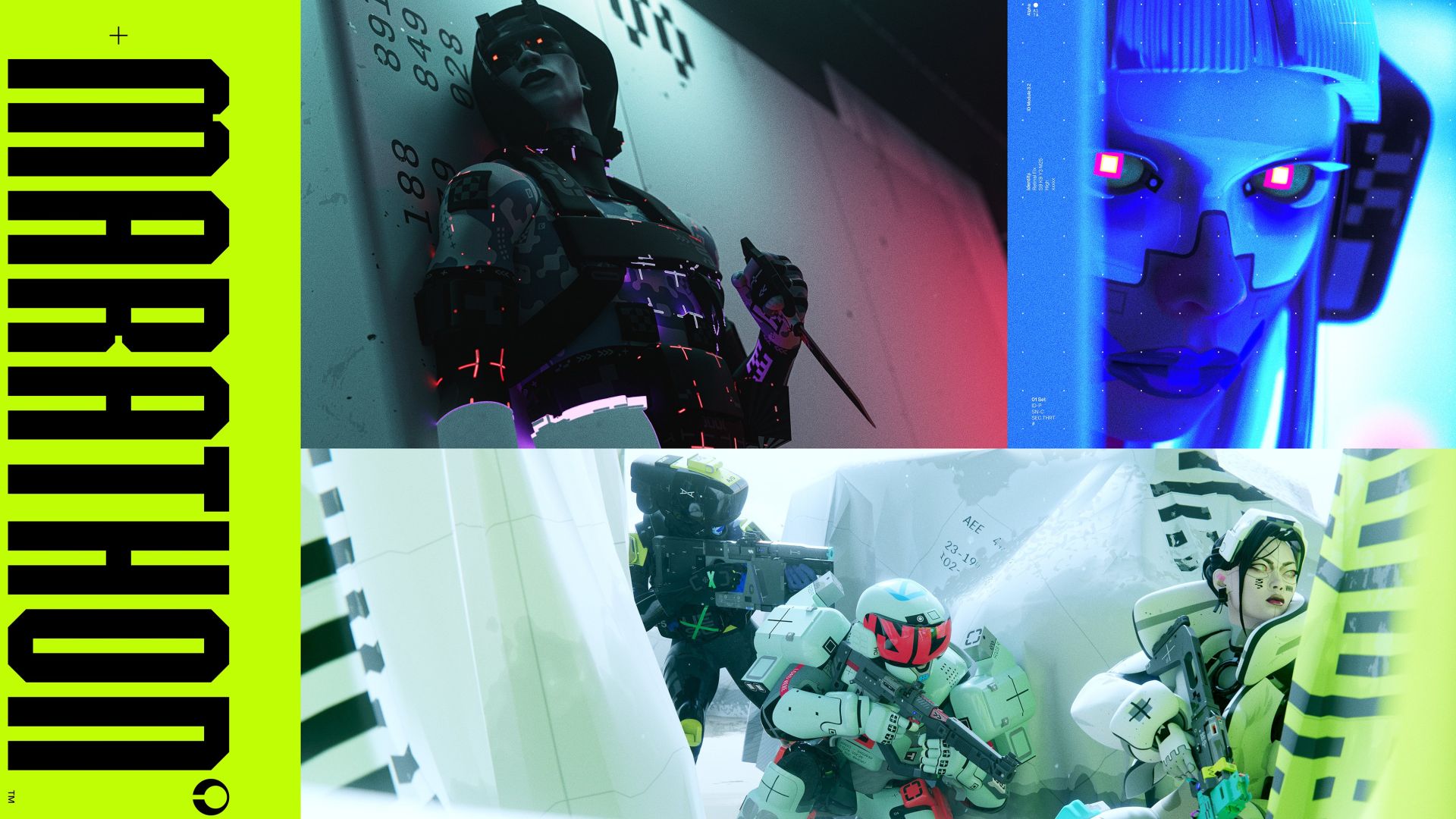
Marathon’s player count tells a story Bungie doesn’t want to tell for them… One month. That’s how long it took for the wheels to visibly wobble on what was supposed to be Bungie’s triumphant return to original IP. Marathon launched March 5th to genuinely decent reviews and a player base that was, if not explosive, at least alive. It peaked on Steam at 88,337 concurrent players. That’s not a Helldivers 2 number, but it’s a number. It was a foundation.
Marathon has lost 71% of its Steam player base since launch, with the most recent 24-hour peak sitting around 25,000 concurrent players. And before you say “well, not every game needs Fortnite numbers” — you’re right. But every game needs enough players to function. This one is an extraction shooter. The entire design philosophy depends on other humans being present, armed, and willing to make your life difficult. When queues stretch out and matches start pulling from mismatched regions just to fill a lobby, the core tension of the genre evaporates. You’re not surviving against clever adversaries. You’re surviving against lag and emptiness.
Sources suggest roughly 70% of Marathon’s player base is on Steam, meaning the console populations on PlayStation and Xbox are even smaller than the already-concerning PC numbers. The game is now ranked 106th most-played on Xbox. Marathon charted on PlayStation at launch and has since fallen off the top ten entirely. Whatever story Sony is telling internally about this game’s health, the data is not cooperating.
Then the budget report dropped, and things got genuinely uncomfortable.
Marathon Player Count: The Numbers Don’t Lie
Industry reporter Paul Tassi confirmed that Marathon’s development budget is over $200 million and likely north of $250 million. Critically, that figure doesn’t include the ongoing costs of keeping a live-service game running: maintenance, content updates, server infrastructure, and all the recurring expenses that a game like this requires just to exist. So the $250 million is the floor, not the ceiling. Every week Bungie keeps the lights on adds to a number that is already staggering.
For context on how bad the math is: 1.2 million copies sold at $40 a pop generates roughly $55 million in gross revenue. Before platform cuts. Before refunds. Before a single line of server costs. Bungie spent at minimum four times what they’ve made back, and the player retention curve is still pointing down. This is the part where the word “unsustainable” usually shows up in polite industry coverage. We’ll just say it plainly: this is a problem.
That $40 price point is worth sitting with for a second. The thinking was presumably that a lower barrier to entry would drive volume where $70 would not. But 1.2 million units at $40 is a worse outcome than, say, 800,000 units at $70 would have been, and it still doesn’t get you anywhere close to recouping a quarter-billion dollar development cost. There’s also the matter of microtransactions, which are present in Marathon and are, predictably, unpopular with players. They represent a second revenue stream that needs to work very hard to compensate for the gap between spend and return. Right now, there’s no evidence they’re doing that.
The Silence Is the Problem
What makes all of this worse is the communication strategy, which is to say, the absence of one.
Bungie’s official response to the growing concern around Marathon’s trajectory has been relentlessly upbeat in the most hollow way possible. The studio’s blog post on the subject pledged to be “in it for the long haul” and promised “many years of steady improvements.” That’s the kind of language PR departments reach for when they’ve been told not to say anything specific. It’s a warm blanket draped over a house that may or may not be on fire. It tells you nothing. It addresses nothing. It’s a statement written to end a conversation rather than have one.
Game Director Joe Ziegler has been more active, at least on social media. He’s been running experimental queues, including a Duo mode tested across multiple zones, and recently teased a new experimental queue starting around April 14th or 15th. The exact date was apparently unclear even to Bungie’s own communications, because it was announced with two different dates. That kind of iterative, community-facing work is genuinely good and worth acknowledging. The problem is that it’s happening in the margins while the core questions go completely unanswered.
What does Bungie consider a healthy player count at this stage? What does success look like for Season 1? Is there a population threshold below which the game’s matchmaking model stops functioning? What is the plan if player counts continue declining into Season 2? Nobody will say. Instead, the company communicates in patch notes and vague encouragement while the internet does the math for them.
The Hubris Problem
The frustrating thing is that to the fanbase, Marathon is not a bad game. The reviews were mostly positive. A significant slice of the Steam player base logged 50 or more hours. There is a dedicated core who clearly found something worth sticking around for. But extraction shooters live and die by population density, and the players who fell off in the first month are not coming back for a blog post that says “we’re committed.” They’re coming back for a reason: a new mode, a free weekend, a PvE option that lets someone experience the world without immediately losing all their gear to a squad of veterans who have been farming since launch day.
Marathon got kneecapped early by a rough initial reveal, an art theft controversy that dominated the news cycle at the worst possible moment, and a genre choice that was already getting crowded by the time it launched. None of those are unrecoverable on their own. All of them together met with the particular brand of Bungie confidence that has historically treated its audience as lucky to be playing; that combination is harder to shake.
Sony is already operating in the shadow of a $204 million impairment charge tied to Destiny 2’s underperformance. Marathon was supposed to be the correction. The proof that Bungie still had it, that Sony’s $3.6 billion acquisition was going to pay off eventually, and that the live-service future PlayStation bet on was still viable. Instead, it’s becoming a second data point in a pattern nobody at PlayStation wants to acknowledge out loud.
Say Something
Bungie needs to start talking. Not blog posts. Not vague commitments to longevity and seasonal roadmaps that could mean anything. Real transparency about what the studio sees when it looks at these numbers, what internal benchmarks exist, and what the actual plan is to reverse the retention curve before Season 2 arrives in June.
The players who are still there, grinding Cryo Archive and waiting for whatever the next experimental queue turns into, deserve a developer that speaks to them like adults rather than customers to be managed. The goodwill that exists in that remaining community is real, and it is not infinite.
The bill is already here. Bungie should probably look at it.

AJ Hanson has been part of games media since 2011, writing, streaming, and ranting about the industry long before it was his job. He runs the Galaxy’s Edge Discord, the go-to community for fans of Disney’s Star Wars parks, and works as Marketing Director for the Virtual Cantina Network, helping produce shows, interviews, and fan events. A lifelong Star Wars fan and unapologetic nerd, AJ’s focus has always been on building spaces where people can connect, argue, and celebrate the things they love without all the corporate gloss.