Now Reading: Crimson Desert Review (100+ Hours): Pearl Abyss Built Something Special — The Critics Just Didn’t Wait For It
-
01
Crimson Desert Review (100+ Hours): Pearl Abyss Built Something Special — The Critics Just Didn’t Wait For It
Crimson Desert Review (100+ Hours): Pearl Abyss Built Something Special — The Critics Just Didn’t Wait For It
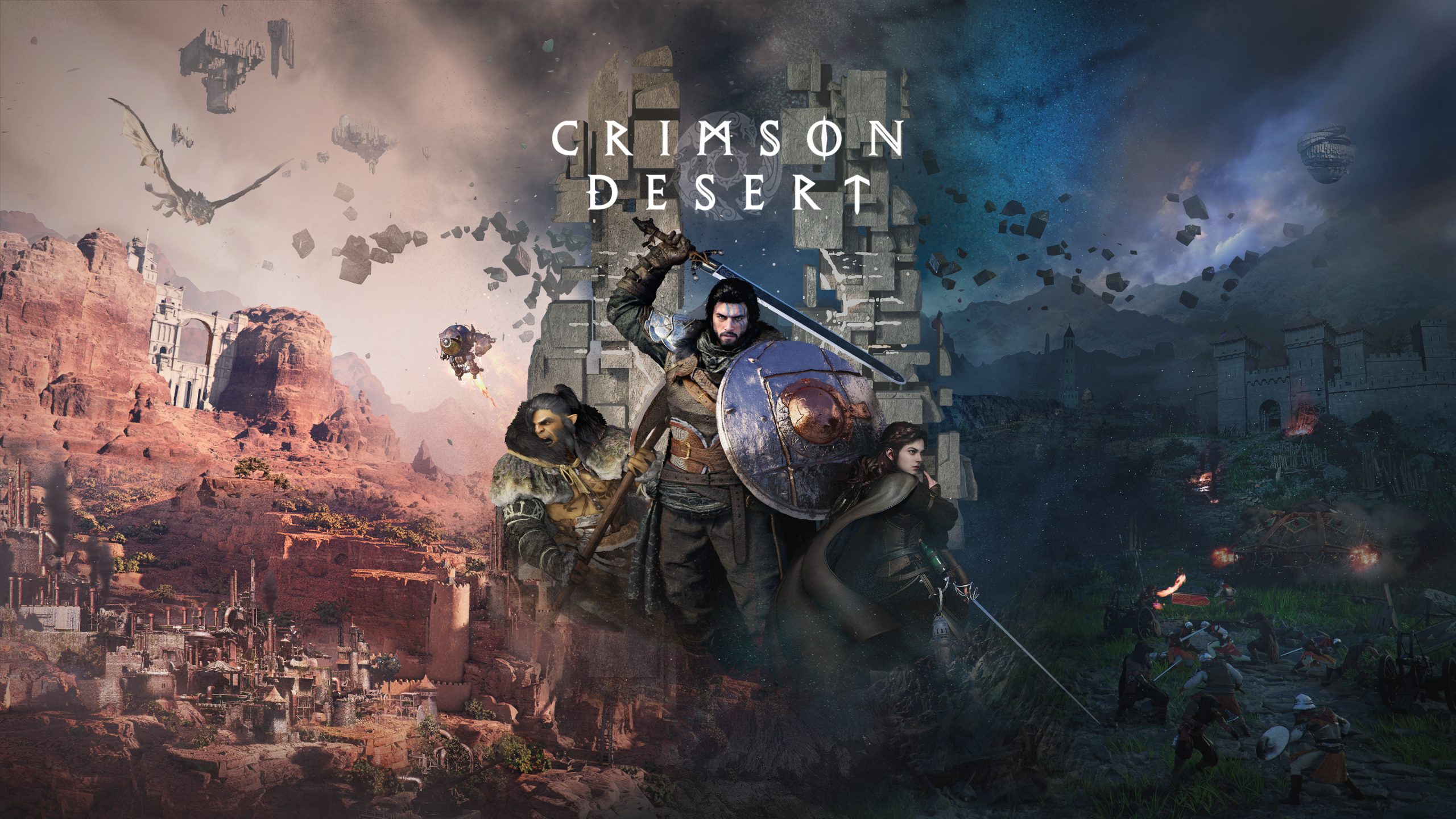
We’ve been inside Pywel for over 100 hours now, and we are not done. That’s the review. You can close the tab.
Still here? Good. Because this one deserves more than a number and a paragraph from someone who dipped out after the first major boss and called it a verdict.
Let’s talk about what Crimson Desert actually is, what the discourse around it has been, and why the gap between the game’s launch week reception and its current 86% very positive rating on Steam — sitting on nearly 46,000 user reviews — tells you almost everything you need to know.
The World Pearl Abyss Built
The continent of Pywel is enormous and it earns its size, which is rarer than it should be. From the green plains and dense woodland of its western reaches to the arid stretches and craggy mountain passes further in, the world has a texture to it — a sense that it was built outward from a living, breathing center rather than copy-pasted into scale. You ride a horse across a hillside at golden hour and it genuinely stops you cold. You find a ruin that leads to a puzzle that leads to a dungeon that leads to a boss encounter nobody told you about, and you think: “I could’ve missed this entirely.”
That feeling — the sense of wonder and exploration that scratches a Skyrim itch — never really goes away.
Pearl Abyss built this on their proprietary BlackSpace Engine, and technically it is a showcase. The environmental detail, the lighting, the sheer visual fidelity at scale — it is, legitimately, one of the best-looking games in years. And unlike a lot of games that lead with visuals and coast on them, Crimson Desert has actual mechanical depth underneath.
The Combat: Give It Time. It Will Give Back.
Here’s where we have to be honest with you, because we like you. The combat does not welcome you. It presents itself like a bouncer at a door it’s not sure you should be let into. Kliff’s moveset is dense — weapon skills, bare-hand combinations, grapples, slides, counters, dodges — and the game does not hold your hand through any of it. In the early hours, especially on keyboard and mouse, it can feel actively hostile. The combat is complex and demands considerable effort to master, with available moves changing depending on how you approach an enemy.
That’s not a bug. That’s the design. And once it clicks — once you stop button-mashing and start reading the room, countering, chaining — it becomes one of the most satisfying action combat systems we’ve played in years. The boss fights are spectacular. They are hard, they are creative, and they made us feel genuinely good about ourselves when we cleared them.
But we understand why people bounced. And that brings us to the larger conversation.
The Review Discourse: Fair Criticism, and Then There Was IGN
We talk a lot in this space about reviewing the game you have, not the game you want. It’s a principle we hold because it matters. At launch, the game sat at a Mixed rating with only 66% positive reviews, driven by complaints about controls, UI design, and performance issues. Those complaints were real. The inventory management was a genuine headache. QOL features that should have been there on day one were absent. Players quickly became overburdened with items, with no storage options in camps. A game that asks for your patience has an obligation to respect your time in return, and in some areas, Crimson Desert came up short at launch.
So when reviewers who bounced off the combat or hit a quest-breaking bug scored it accordingly — we get it. We don’t fully agree, but we get it. That’s the review-the-game-you-have doctrine in action; even when it produces scores, we think they undervalue the overall experience.
And then there was IGN.
The practical damage was real. Pearl Abyss saw its stock drop approximately 30 percent after reviews went live. That’s not an abstract consequence. That affects studios. That affects people’s jobs. And when a 6/10 from one outlet carries that kind of weight, the obligation to get it right — to actually spend time in the game — is significant.
Pearl Abyss Has Been Listening
Credit where it’s due: Pearl Abyss did not go quiet after a rough launch. The studio released an update bringing over 100 fixes, resolving most of the major complaints. Controls have been addressed. Boss difficulty has been tuned. QOL features are actively arriving. Steam reviews now sit at 86% Very Positive across nearly 46,000 reviews. This is a studio that is actively finishing what it started, in public, with receipts. That’s not a small thing.
Yes, a lot of people already made their decision and left. And yes, the reality of live-service-adjacent discourse is that first impressions calcify fast. That’s a problem the industry has, not just this game. But for anyone sitting on the fence: the version of Crimson Desert that exists right now is substantially better than what launched on March 19th, and it was already worth playing then if you were willing to lean in.
TL;DR (For The Skippers)
Crimson Desert is a genuinely exceptional open-world action RPG that got brutalized at launch by a combination of real problems and deeply impatient criticism. The combat has a steep learning curve. The QOL was lacking at release and is actively being addressed. Some people left early, and, in some cases, you can understand why—you review what you have, not what you want. But some outlets, IGN chief among them, were not doing straight coverage. They were doing something else. Over 100 hours in, Pywel remains one of the most absorbing worlds we’ve spent time in all year. Play it. Play it with patience. And definitely use a controller.
Crimson Desert Review: The Verdict
By the 100-hour mark, there is still content left undiscovered, and the story isn’t finished — yet not a minute of free time goes unspent in this world. That is the metric that matters to us. Not a launch-week score from a reviewer who hit a bug and wrote it off. Not a 6/10 that sent a studio’s stock into freefall. The metric is: are you still playing? Are you still finding things? Are you still surprised?
Yes. On all three counts.
Crimson Desert is not a perfect game. It is a massive, ambitious, visually staggering, mechanically demanding, occasionally frustrating, and frequently breathtaking game. It rewards patience in the best way and the worst way simultaneously, and it is absolutely worth your time.
Use a controller. Skip the first few hours if you must, but don’t you dare quit before it opens up.

AJ Hanson has been part of games media since 2011, writing, streaming, and ranting about the industry long before it was his job. He runs the Galaxy’s Edge Discord, the go-to community for fans of Disney’s Star Wars parks, and works as Marketing Director for the Virtual Cantina Network, helping produce shows, interviews, and fan events. A lifelong Star Wars fan and unapologetic nerd, AJ’s focus has always been on building spaces where people can connect, argue, and celebrate the things they love without all the corporate gloss.