Star Wars Zero Company Review: The Best Kind of Squad Trouble
What IS Star Wars Zero Company?
Here’s the thing about tactical combat games in the XCOM/Shadowrun lineage: they usually make you choose. You get the deep strategic layer or you get the characters you actually care about, but rarely both at full strength. Somebody always gets shortchanged. Either the combat’s a tight, punishing puzzle box and the cast is a rotating set of stat blocks with a face slapped on, or the relationships and dialogue are the whole point and the actual fighting is a formality you click through to get back to the conversations. Zero Company looked at that tradeoff and said “why not both,” then actually delivered on it.
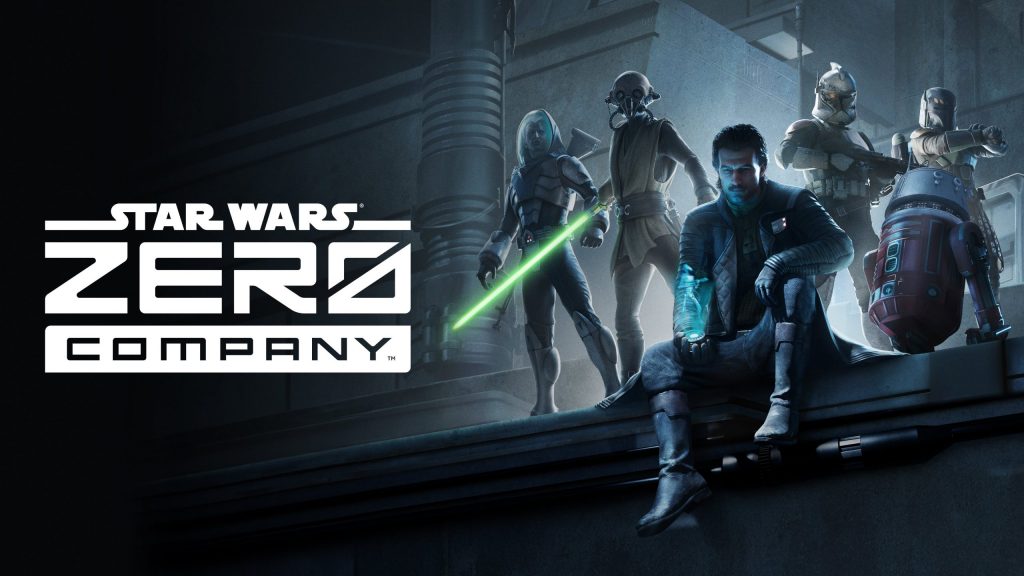
If you’ve spent any time with Mass Effect, you already know the shape of this game’s heart, even if you’ve never touched a grid-based tactics title in your life. Recruit your crew, talk to them between missions, watch relationships shift depending on what you say and who you bring on which job, then take that crew into fights where positioning, cover, and squad composition actually matter. That’s the exact foundation XCOM built its name on, with Shadowrun’s flavor of squad specialization running underneath it. That’s Zero Company. Two genres that usually live in separate houses, sharing one roof, and somehow not tripping over each other’s furniture.
It also helps that this isn’t a Skywalker-saga retread with lightsabers bolted on for the sake of it. This is a squad-level, boots-on-the-ground slice of the galaxy, the kind of setting that suits a tactics game better than another Jedi-vs-Sith rehash ever could. You’re not swinging a laser sword at a Sith Lord in some throne room. You’re managing a crew of specialists who each have their own reasons for being there, their own baggage, and opinions about the orders coming down the chain that they’re not shy about sharing. That grounded approach is exactly why the character work lands as hard as it does. Nobody here is a chosen one. They’re just the people who showed up.
Want the video? You press the button, we call YouTube.
Nothing loads from YouTube until you click. We’ll use youtube-nocookie.com after that, YouTube may track per their policy.
If you accept this notice, your choice will be saved and the page will refresh.
The Story: Yes, It’s Actually Good
We say this a lot less than you’d think for a franchise with this many spinoffs, sequels, and “special editions”: the story here is great. Full stop, no asterisk for “great for a Star Wars game.”
It knows what it’s doing with the era it’s set in, it gives its cast room to actually be people instead of exposition delivery systems, and it builds to a climax that earns the buildup instead of just throwing a bigger explosion at you and calling it a finale. Too many games, Star Wars ones especially, treat the ending as a checklist: bigger boss, louder music, roll credits. Zero Company treats it as the payoff for everything that came before. The character beats you’ve been building for hours cash in all at once, and it lands.
This is the part where a lot of coverage would tell you “no spoilers” and then vaguely gesture at themes for four paragraphs. We’re not doing that. Go in blind if you can. What we’ll say instead is this: if you’ve ever wanted a Star Wars story that trusts its cast and its player enough to slow down before it speeds up, this is that story.
Pacing matters here in a way a lot of tactical combat games don’t bother getting right. There’s a rhythm to how missions escalate, how much breathing room you get between big story beats, and how the smaller character moments feed into the larger arc instead of sitting off to the side as optional flavor text. By the time the campaign starts pulling its threads together, none of it feels rushed and none of it feels padded. That’s a hard needle to thread in a genre that usually errs on one side or the other, either racing to the credits or bloating the middle third with filler missions to hit a runtime target. Zero Company doesn’t do either. It just tells its story at the pace the story actually needs, and then it sticks the landing when it matters most.
Customization: Actually Unmatched, Not Marketing-Unmatched
Every game claims “unmatched customization” somewhere in a press release. Usually that means three hats and a color slider. Zero Company’s version is the real deal, the kind where you finish a run and immediately start thinking about the squad you’d build if you did it all again.
Loadouts, specializations, how you build out your companions’ kits, who you pair together and why. The layers stack in ways that actually change how missions play out, not just how your squad looks standing around in the hangar. This is the kind of system that turns a single playthrough into a “well, next time I’m doing…” conversation the second the credits roll. We’re already planning that second run with a completely different squad, and we haven’t even finished writing this review.
That’s the highest compliment a system like this can get: it makes you want to throw out everything you learned and start over on purpose.
Part of why it works so well is that the customization never feels bolted on as a checklist feature. Every choice you make about how a companion fights ripples into how missions actually play out on the grid: who can hold a chokepoint, who needs to be repositioned before a fight opens up, who’s built to punish enemies for grouping up. Zero Company lets you change how a fight is fought, not just the numbers behind it, and once that clicks, it’s hard to go back to games that only offer the numbers.
The Companions: Great System, Wanted More of It
The Mass Effect comparison isn’t just about vibes. The actual mechanic of recruiting, talking to, and building relationships with your squad works exactly as well here as it does in the games that made that formula famous. Conversations feel earned, reactions feel specific to who’s in the room, and the write-up on each companion goes deeper than the usual token-crew treatment.
Here’s the honest gripe, and it’s a want more than a complaint: we wanted more companions to actually send on side missions and interact with outside the main line. The system that’s here is genuinely good. We just hit the end of it wanting there to be more of it. Give us a bigger roster to build relationships with, more side content built around specific pairings, more reasons to bring the companions who don’t automatically make the main squad. When the foundation is this solid, wanting more is the best kind of problem a game can hand you.
Think of it like showing up at a party that’s genuinely fun and then realizing it’s a smaller guest list than you expected. Nobody there is boring. You just wish there were more people to talk to before the night ends. That’s the companion roster in a sentence: every person on it earns their spot, and the game would only get better by inviting a few more.
Where It Actually Stumbles
Nothing’s perfect, and Zero Company has two issues worth being straight about.
First: performance. There are stretches where the game just doesn’t run as smoothly as a title this polished elsewhere should, and it’s the kind of thing that yanks you out of a mission at exactly the wrong moment. You’ll be locked into a tense standoff, everything’s clicking, and then a stutter or a frame hitch reminds you that you’re playing a piece of software instead of living inside the moment the writing and the mission design just spent twenty minutes building. Add in some camera angles that seem to have personally decided you don’t need to see the thing you’re trying to shoot (cover that blocks your view at the exact wrong pivot, framing during key story beats that undercuts what should be a gut-punch) and you’ve got a couple of rough edges on an otherwise sharp game. Neither one breaks the experience. Both are worth mentioning, because pretending a game this good has zero issues helps nobody, and because the people making the sequel deserve to know exactly where to point the polish pass.
Second, and this is the bigger one for anyone who cares about the tactics side of this equation: difficulty scaling on the lower settings undersells the squad system it’s built around. Play it easy or normal and enemies simply don’t hit hard enough to force real squad rotation. You find five people who work, you keep them, and beyond the first couple of missions you can bench your medic entirely because nobody’s taking enough damage to need one. That’s a problem specifically because the customization is this good. A system built to reward experimentation shouldn’t let you coast on the first build that clicked. If you want the full value of everything we just spent four paragraphs praising, bump the difficulty up. On the harder settings, we’d bet this becomes a genuinely different, more demanding game. On the lower ones, it lets you get lazy in a way the rest of the design actively argues against.
Who This Is Actually For
If you came up on the Mass Effect trilogy and have been waiting for something to scratch that exact itch (recruit, bond, deploy, repeat), this is the closest anything’s come in a long time, and it happens to be wearing a Star Wars jacket while it does it. If you’re a tactics purist who wants the character stuff to just get out of the way so you can optimize your grid positioning in peace, you’ll still get a genuinely deep system to chew on, even if you occasionally have to sit through a conversation to get back to it. And if you’re a Star Wars fan who’s been burned one too many times by a game that treats the license as the whole pitch instead of the setting for an actual story, this is the one to trust again.
The one group who should adjust their expectations going in: play above the easiest settings if you want the squad-building to mean anything past the first few hours. On normal and above, the system that makes this game worth talking about actually gets to flex. On easy, you’ll finish it having barely touched half of what’s here, and that would be a shame given how much thought clearly went into it.
TL;DR (For The Skippers)
- A Mass Effect-style companion system slapped onto XCOM/Shadowrun-style tactical combat, and it works.
- The story sticks the landing, especially the climax. This is genuinely one of the better Star Wars stories in years.
- Squad customization is the deepest it’s ever been in this genre. You will want to run it again with a different crew.
- Performance hiccups and some genuinely baffling camera angles knock it down from perfect.
- Lower difficulties let you get away with running the same five people the whole game, because nothing can actually hurt them.
- More companions for side content would’ve been nice. Not a complaint. A want.
We rate everything on the following scale:
- PRESS X — recommend it, worth your time
- YOUR CALL — mixed bag, depends on what you want out of it
- SKIP IT — don’t bother
So, Press X or Skip It?
We’re pressing X, and we’re pressing it hard.
Performance issues and a camera that occasionally forgets its job aren’t nothing, and the easy-mode squad stagnation is a real design gap worth calling out. But none of that changes what this game gets right: a Star Wars story that actually sticks its climax, a customization system deep enough to make you plan your next run before you’ve finished this one, and a companion system that borrows from the best in the business and holds its own. The companions want expanding, not fixing. The story wants nothing at all. It’s already there.
If you’ve been burned by Star Wars games chasing the next license tie-in instead of an actual story, or if you’ve been waiting for a tactical combat game with a cast worth caring about instead of a spreadsheet with faces on it, Zero Company is worth your time. Play it on something above easy if you want the squad management to actually mean something. Either way, clear your schedule for that ending.
PRESS X.